
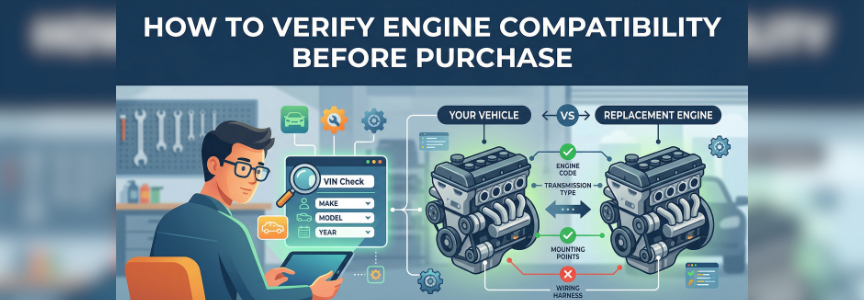
Buying a replacement engine is a major investment, and ensuring compatibility with your vehicle is absolutely essential. Installing the wrong engine can lead to performance issues, costly repairs, or even complete failure. Whether you’re considering a Used Engine or exploring quality used engines, this guide will walk you through how to verify compatibility before making a purchase.
Why Engine Compatibility Matters
Choosing a compatible engine ensures:
- Proper fit and installation
- Optimal performance
- Fuel efficiency
- Reduced risk of damage
- Long-term reliability
An incompatible engine can cause serious mechanical and electrical problems.
1. Check Your Vehicle’s VIN
The Vehicle Identification Number (VIN) is the most accurate way to identify the correct engine.
What to Do:
- Locate your VIN (dashboard, door frame, or documents)
- Use it to find engine specifications
- Share it with the seller or dealer
The VIN provides detailed information about your car’s original engine.
2. Know Your Engine Specifications
Understanding your current engine helps avoid mismatches.
Key Details:
- Engine size (e.g., 2.0L, 3.5L)
- Fuel type (petrol, diesel, hybrid)
- Engine code
- Number of cylinders
These specifications must match the replacement Used Engine.
3. Match Engine Codes
Engine codes are unique identifiers for specific engine models.
- Check the code on your existing engine
- Compare it with the replacement engine
- Ensure an exact match whenever possible
Matching engine codes ensures perfect compatibility.
4. Check Mounting Points
Physical fit is just as important as specifications.
- Compare engine mounts and brackets
- Ensure alignment with your vehicle’s frame
- Verify compatibility with transmission
Even slight differences can cause installation issues.
5. Verify Electrical and Sensor Compatibility
Modern engines rely heavily on electronics.
- Check wiring harness compatibility
- Ensure sensors match your vehicle system
- Confirm ECU (Engine Control Unit) compatibility
Mismatched electronics can lead to malfunction or error codes.
6. Confirm Transmission Compatibility
Your engine must work seamlessly with your transmission.
- Check if the engine supports your transmission type
- Ensure proper alignment and connection
- Consult a mechanic if unsure
This is especially important when buying quality used engines.
7. Inspect the Engine Condition
Compatibility isn’t just about fit—it’s also about condition.
Look for:
- No visible cracks or damage
- Clean internal components
- No oil leaks or sludge
- Verified mileage
A well-maintained engine ensures better performance and longevity.
8. Ask for Documentation
Always request proper documentation from the seller.
- Engine history and source vehicle
- Mileage records
- Service history
- Warranty details
Reliable sellers of quality used engines will provide this information.
9. Buy from Trusted Sellers
Choosing the right seller is crucial.
- Certified auto parts dealers
- Reputable online platforms
- Salvage yards with good reviews
Avoid unknown sellers offering extremely low prices.
10. Consult a Professional Mechanic
If you’re unsure, seek expert advice.
- Mechanics can verify compatibility
- They can inspect the engine
- Help with installation
Professional guidance reduces the risk of mistakes.
Common Mistakes to Avoid
- Ignoring engine codes
- Not checking VIN details
- Buying based on price alone
- Skipping inspection
- Overlooking electronic compatibility
Avoiding these mistakes ensures a successful purchase.
Expert Tips for a Safe Purchase
- Always double-check compatibility
- Choose engines with warranty
- Prefer low-mileage engines
- Compare multiple options
- Keep records of your purchase
Final Thoughts
Verifying engine compatibility before purchase is a critical step that should never be overlooked. Whether you’re buying a Used Engine or exploring quality used engines, taking the time to check specifications, engine codes, and overall condition can save you from costly mistakes.
By following this guide and consulting professionals when needed, you can confidently choose the right engine and ensure smooth performance for your vehicle.

 How to Verify Engine Compatibility Before Purchase
 Where to Find Cheap Used Engines for Sale
 The Complete Guide to Finding High-Quality Used Engines for Your Vehicle
 Ford Escape Engine Codes Explained: What to Know Before Buying Used
 Buying a Used Engine? How Mileage Makes a Difference